


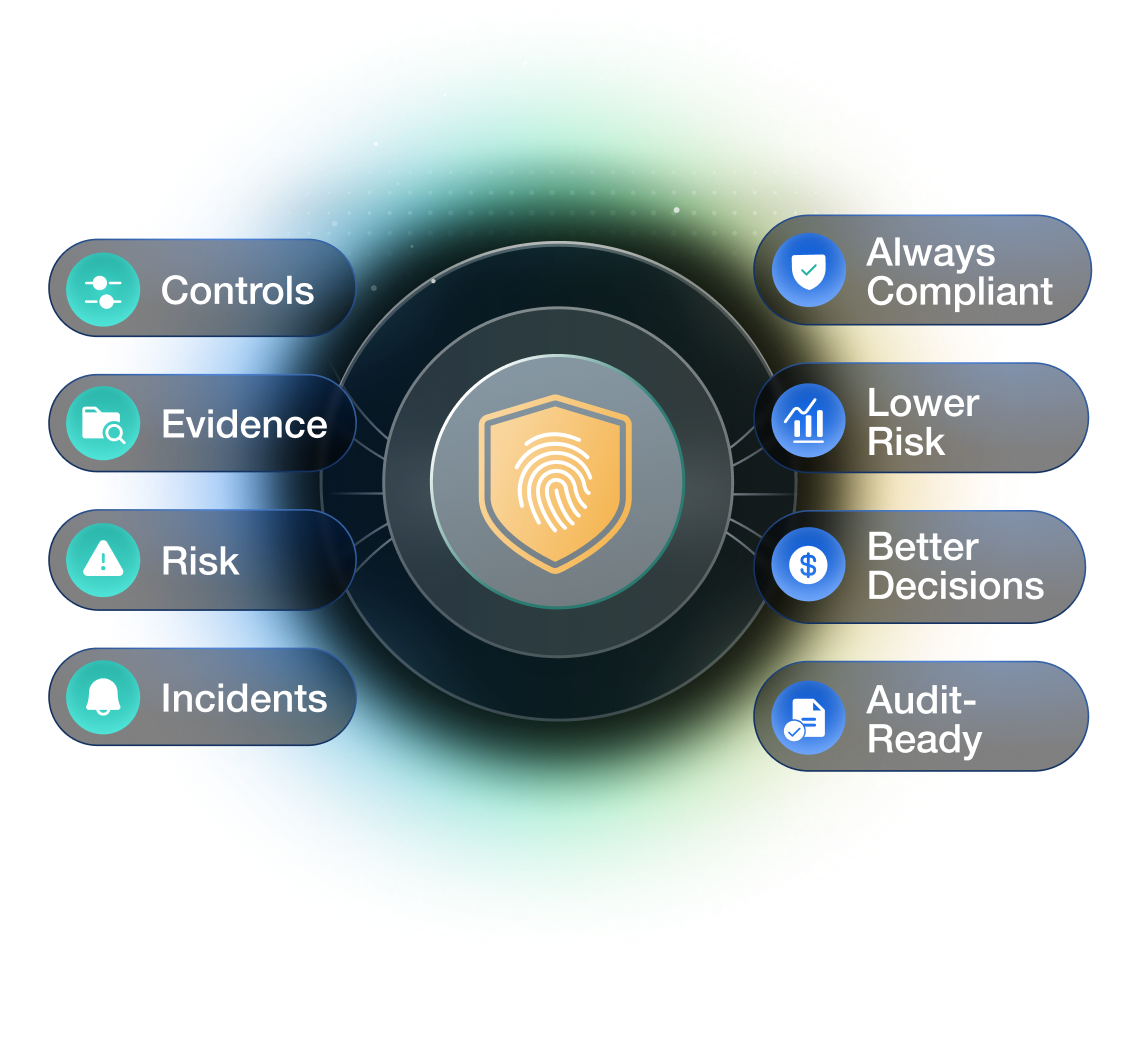
Cyber Compliance
Most organizations
still treat cybersecurity compliance as a periodic exercise. Run the assessment. Collect the evidence. Prepare for the audit. Repeat next quarter. But cyber risk does not wait for your audit cycle. Controls drift. Configurations change. And by the time your next assessment comes around, the picture is already outdated.
Some organizations
solve this by buying a dedicated cyber compliance tool alongside their main GRC system. These tools work. But they run as a separate system. Your cyber data lives in one place. Your governance, risk, and enterprise compliance live in another. Connected by APIs is not the same as unified.
Continuous Control Monitoring (CCM)
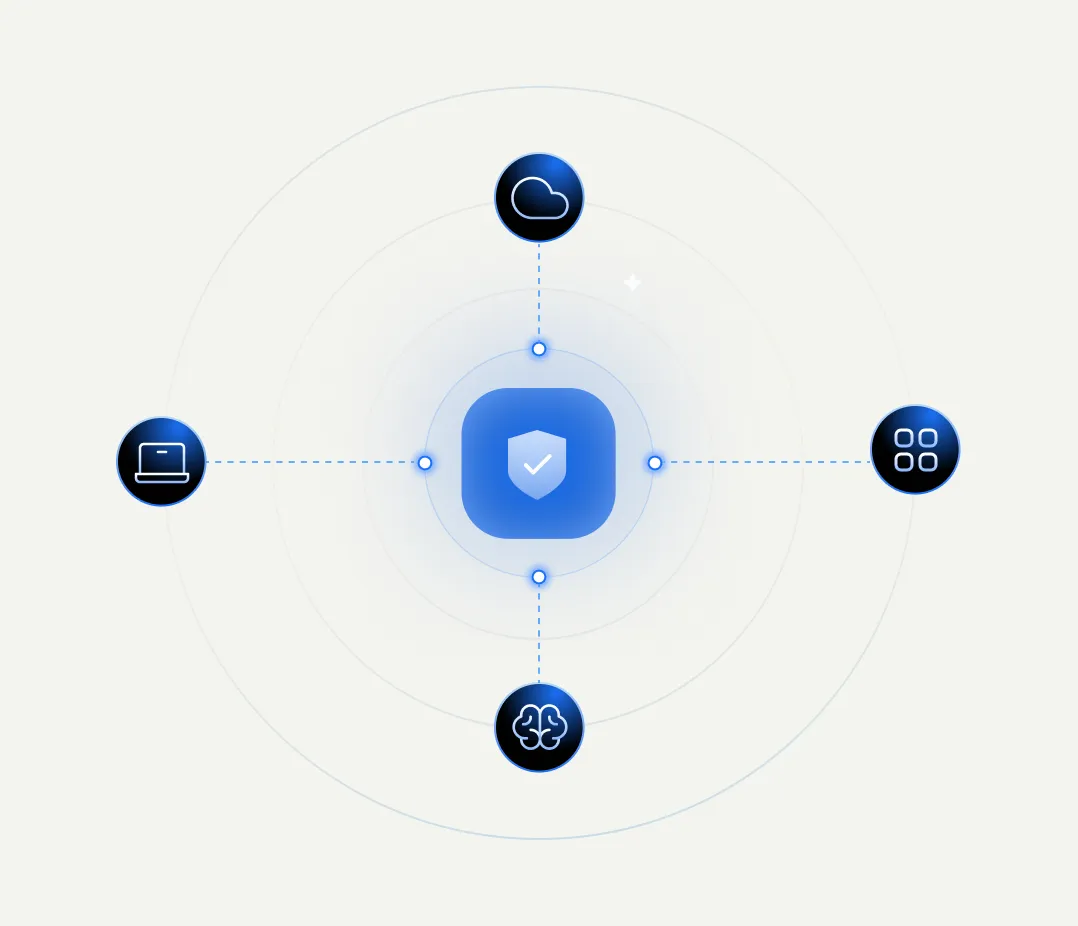
The core of LockThreat's Cyber Compliance layer. CCM connects directly to your cloud infrastructure, endpoints, and enterprise applications to validate that your cybersecurity controls are actually working. Not once a quarter. Continuously.
When a control drifts or fails, the platform detects it, generates alerts, and creates audit-ready compliance records automatically. Evidence is collected as the controls operate, not assembled manually before an audit. When auditors ask for evidence, it is already there.
CCM also extends to your AI deployments, continuously monitoring AI application behavior against the control thresholds you define. For more on AI-specific governance capabilities, visit AI Governance & Security
CCM also extends to your AI deployments, continuously monitoring AI application behavior against the control thresholds you define. For more on AI-specific governance capabilities, visit AI Governance & Security
One control library. Many frameworks. Evidence collected automatically.
Cybersecurity Posture Assessment
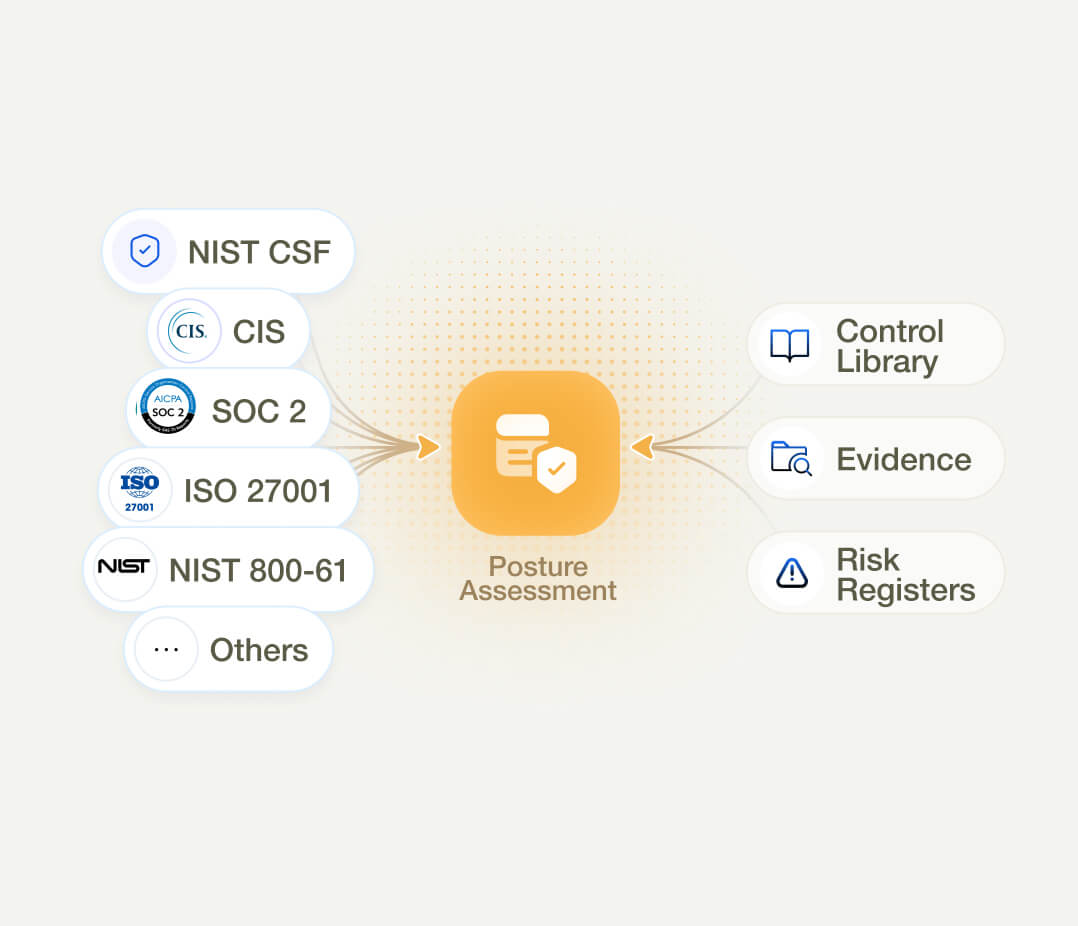
Structured assessments and audits across the security frameworks that matter: NIST CSF, CIS, SOC 2, ISO 27001, NIST 800-61, and others. Assessments connect directly to your control library, evidence, and risk registers. When an assessment finds a gap, it traces back to the specific control and framework requirement, so your team knows exactly what to fix.
Shadow AI Detection: Scans your cloud environments, endpoints, and network to find every AI asset in your organization: approved tools, unapproved tools, downloaded models, and shadow AI deployments. Continuous inventory, not a one-time scan. You cannot govern what you cannot see.
Shadow AI Detection: Scans your cloud environments, endpoints, and network to find every AI asset in your organization: approved tools, unapproved tools, downloaded models, and shadow AI deployments. Continuous inventory, not a one-time scan. You cannot govern what you cannot see.
Lorem ipsum dolor sit amet, consectetur adipiscing elit, sed do eiusmod tempor incididunt ut labore et dolore magna aliqua. Ut enim ad minim veniam, quis nostrud exercitation ullamco laboris nisi ut aliquip ex ea commodo consequat. Duis aute irure dolor in reprehenderit in voluptate velit esse cillum dolore eu fugiat nulla pariatur.
One control library. Many frameworks. Evidence collected automatically.
Cyber Risk Quantification
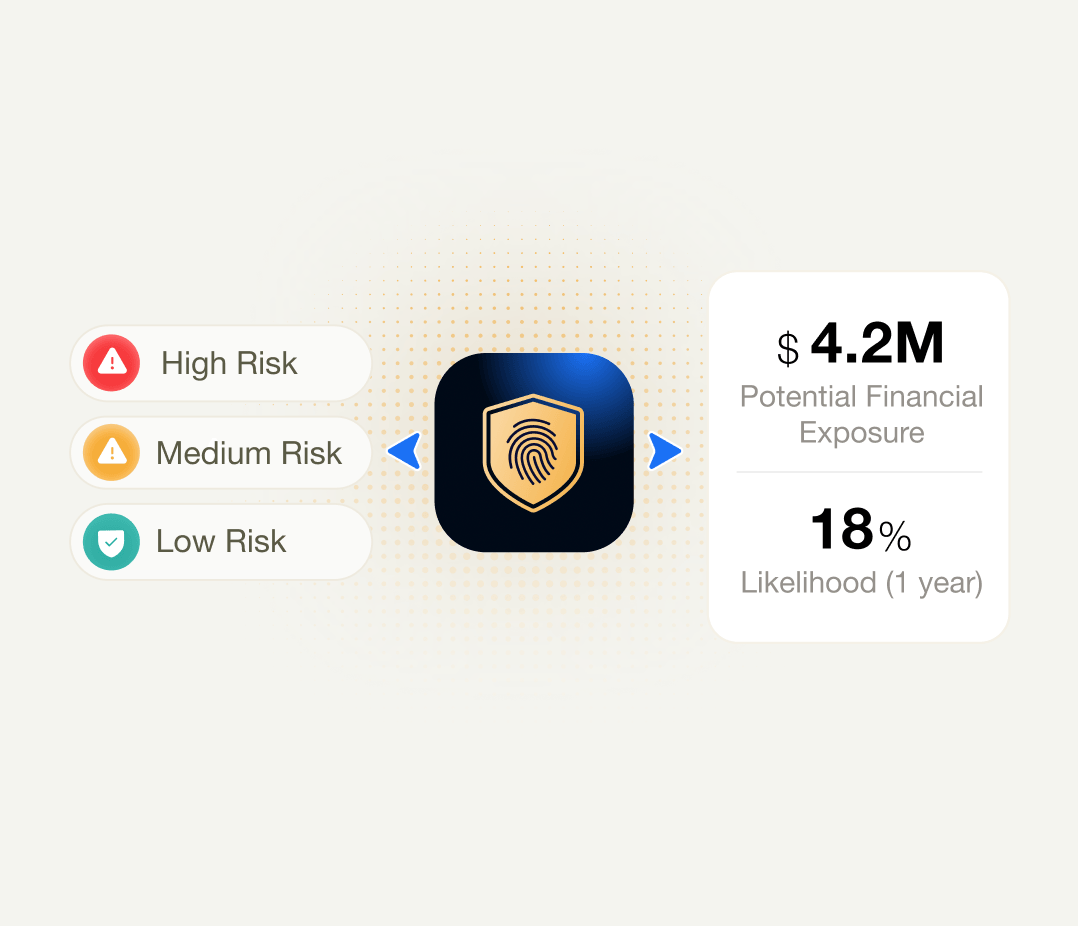
Traditional cyber risk reporting gives leadership a heatmap: red, amber, green. That tells the board something is “high risk” but not what it would cost. LockThreat quantifies cyber risk in financial terms using the FAIR model with both Monte Carlo simulation and deterministic methods. Risk expressed in dollars, not only colors. “A failure of this control could result in $4.2 million in exposure” is a sentence a CFO can act on, not a color code they have to interpret.
Employee AI Protection: Prevents employees from sharing sensitive data, PII, or Protected Health Information (PHI) with public AI tools like ChatGPT, Gemini, or Claude. Enforces your AI usage policies at the browser level with zero friction.
Agentic AI Security: Governs autonomous AI agents embedded in platforms like Salesforce Agentforce, SAP Joule, and Microsoft Copilot. These agents can access enterprise data, invoke APIs, trigger workflows, and make operational decisions without human oversight. LockThreat monitors agent behavior at runtime, detects policy violations and unauthorized actions, and blocks unsafe execution before damage is done.
Lorem ipsum dolor sit amet, consectetur adipiscing elit, sed do eiusmod tempor incididunt ut labore et dolore magna aliqua. Ut enim ad minim veniam, quis nostrud exercitation ullamco laboris nisi ut aliquip ex ea commodo consequat. Duis aute irure dolor in reprehenderit in voluptate velit esse cillum dolore eu fugiat nulla pariatur.
One control library. Many frameworks. Evidence collected automatically.
Incident and Issue Management
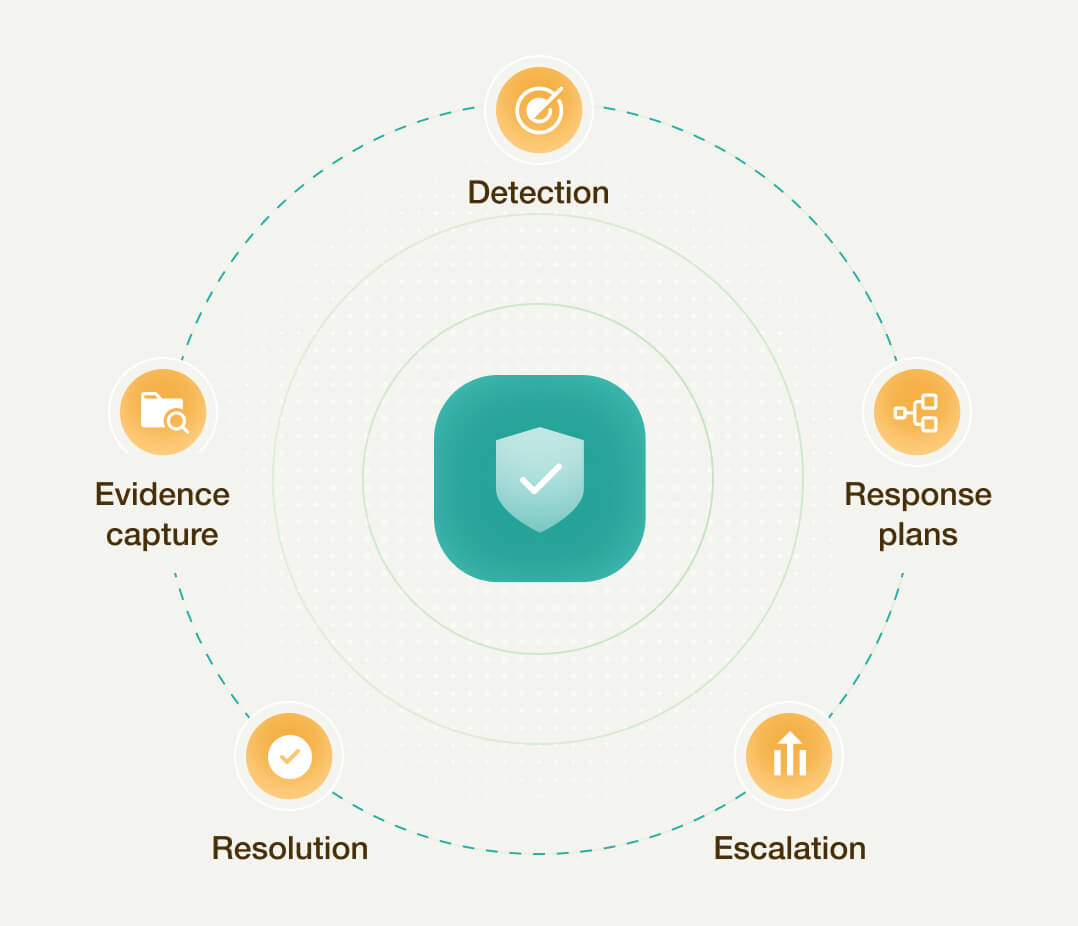
Manages the full incident lifecycle: detection, response plans, escalation, resolution, and evidence capture. Every step is recorded and audit-ready.
Framework and Regulatory Alignment: Continuously monitors your deployed AI applications against the control thresholds you define, including hallucination rates, PII redaction, toxicity, and bias. When any threshold is breached, the platform flags it as a control gap linked directly to the relevant regulatory requirement.
Shadow AI Detection: Scans your cloud environments, endpoints, and network to find every AI asset in your organization: approved tools, unapproved tools, downloaded models, and shadow AI deployments. Continuous inventory, not a one-time scan. You cannot govern what you cannot see.
Lorem ipsum dolor sit amet, consectetur adipiscing elit, sed do eiusmod tempor incididunt ut labore et dolore magna aliqua. Ut enim ad minim veniam, quis nostrud exercitation ullamco laboris nisi ut aliquip ex ea commodo consequat. Duis aute irure dolor in reprehenderit in voluptate velit esse cillum dolore eu fugiat nulla pariatur.
One control library. Many frameworks. Evidence collected automatically.
One Layer of a Full Platform
Cyber compliance does not exist in isolation. Your cybersecurity controls are defined by governance policies. Your cyber risks feed into enterprise risk posture. And your AI deployments create new attack surfaces that traditional cyber compliance was not built to cover.



.png)
.png)